The safest way to store grains long-term is to clean the grain, dry it to an appropriate moisture level, cool it, place it in a suitable storage facility, provide controlled aeration, and continuously monitor temperature, moisture, insects, and mold.
For commercial quantities, a properly designed grain silo with drying, aeration, temperature monitoring, and grain handling equipment provides much better control than simply storing grain in bags or an ordinary warehouse. The five most important factors are:
The longer grain must be stored, the more important these factors become. Grain that is too wet or too warm can deteriorate rapidly, while proper drying and temperature management can significantly extend storage life.
Grain may look dry and stable after harvest, but it is still a biological material. It continues to exchange moisture with surrounding air and undergoes respiration during storage. The main causes of grain deterioration are:
The interaction between moisture, temperature and storage time is especially important. Therefore, long-term storage is not simply a matter of putting grain into a silo and leaving it there. A successful storage system manages the grain throughout the entire storage period.
For medium- and large-scale grain operations, a typical long-term storage process is:
Harvest → Cleaning → Drying → Cooling → Silo Storage → Aeration → Temperature Monitoring → Regular Inspection → Controlled Handling
Each stage has a specific purpose.
| Stage | Main Purpose |
| Harvest | Reduce mechanical damage and contamination |
| Cleaning | Remove foreign material and fines |
| Drying | Reduce excess moisture |
| Cooling | Reduce insect and mold activity |
| Silo storage | Protect grain from weather and contamination |
| Aeration | Control grain temperature and moisture migration |
| Monitoring | Detect hot spots and deterioration early |
| Inspection | Identify insects, mold and condensation |
| Handling | Maintain grain quality during discharge |
Skipping one stage can increase the risk of storage losses.
Harvested grain commonly contains:
Fine material can accumulate in parts of a storage system and create areas with poor airflow. Cleaning can help:
Moisture is one of the most important factors determining whether grain can be stored safely for a long period. Grain that enters storage with excessive moisture has a much higher risk of:
As a general guide, cereal grains around 13–14% moisture can be associated with conditions limiting mold growth, but the appropriate target varies with grain type, temperature, storage duration and storage system. There is no single moisture percentage that is correct for every grain and every storage condition. Therefore, commercial storage projects should determine the target moisture content according to:
If harvested grain is too wet, natural ventilation may not be sufficient to achieve the required moisture level quickly enough. A grain dryer can provide controlled drying before the grain enters long-term storage. This is particularly important in:
Dry grain is not necessarily safe if it is too warm. Cooling grain reduces the activity of insects and microorganisms and helps improve storage stability. Warm grain can cause moisture to move toward cooler areas, potentially creating localized wet zones and condensation. These areas can become hot spots where mold and insects develop.
Aeration is one of the most important technologies for long-term bulk grain storage. An aeration system typically includes:
The objective is not simply to “blow air through grain.” A properly designed aeration system should help:
One of the biggest advantages of a modern grain silo is the ability to monitor the grain mass. Temperature monitoring cables with multiple sensors can detect temperature changes inside the silo before visible spoilage occurs. This matters because a grain pile may look normal from the outside while deterioration is developing internally. A temperature increase can indicate:
Modern commercial systems can integrate:
Temperature Sensors → Monitoring System → Alarm → Operator Action
This allows problems to be identified earlier instead of waiting until spoiled grain is discovered during unloading.
Insects can cause both direct and indirect grain losses. They consume grain, produce heat, create contamination and can contribute to further deterioration. Long-term grain storage should therefore include an integrated pest-management program. Important practices include:
Mold is one of the most serious risks in long-term grain storage. The basic strategy is: Control moisture + control temperature + prevent condensation + monitor continuously. Mold risk increases when grain becomes too wet or when localized hot and humid areas develop.
If mold or suspected contamination is discovered, the affected grain should be isolated and assessed appropriately. Where mycotoxin contamination is possible, laboratory testing may be necessary.
There are several ways to store grain.
| Storage Method | Typical Application | Long-Term Suitability | Automation |
| Grain Bags | Small farms / temporary storage | Low–Medium | Low |
| Warehouse | Bagged or bulk grain | Medium | Low–Medium |
| Steel Grain Silo | Commercial bulk storage | High | High |
For large quantities, steel grain silos provide several advantages:
A flat-bottom silo is commonly considered for large-capacity, long-term storage, while hopper-bottom designs can be advantageous when rapid or complete discharge and easier cleaning are priorities. The appropriate design depends on the grain, capacity, climate, turnover rate and project requirements.
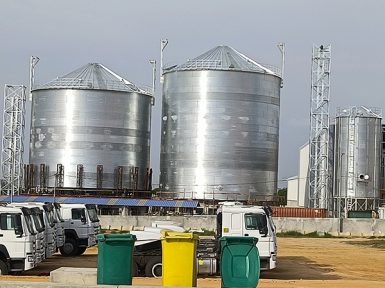
Flat-bottom silos are particularly suitable for:
They can provide economical storage at large capacities. For long-term storage, a flat-bottom silo can be equipped with:
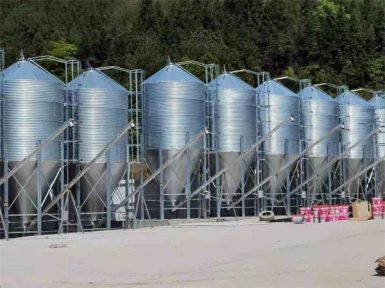
Hopper-bottom silos are useful where easier discharge and cleaning are important. Typical applications include:
The best choice depends on the operational requirements rather than simply choosing the silo with the largest capacity.
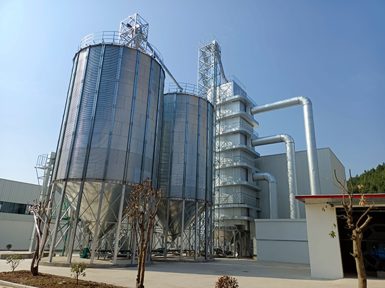
A complete grain storage project may include:
A complete system should be designed as an integrated process rather than purchasing each machine independently.
For commercial grain storage, the objective is not simply to purchase a silo. The objective is to build a system that can receive, clean, dry, store, monitor and discharge grain safely and efficiently.
HKB Grain Silo & Grain Dryer Solutions provides integrated grain storage solutions for different crops, capacities and project requirements.
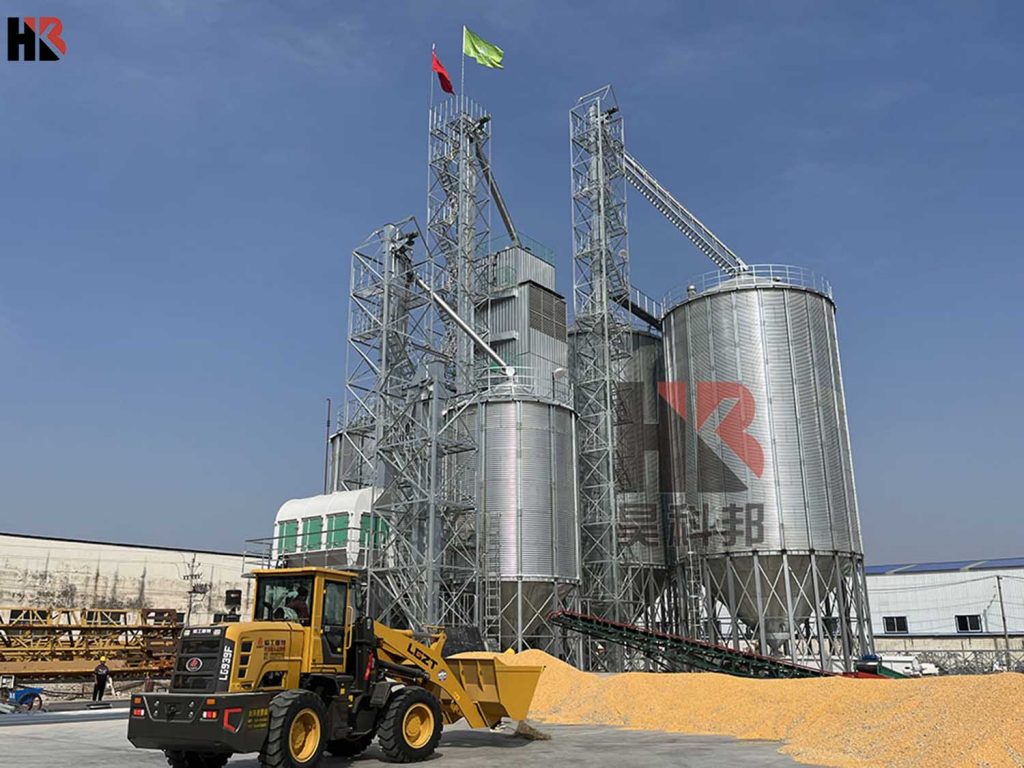
HKB's grain storage solutions can include:
For larger projects, the system can be designed around the customer's:
This approach is particularly useful for grain traders, commercial grain processors, feed mills, large farms, agricultural investors and government grain reserve projects.
Long-term grain storage is a process, not simply a storage location. The most reliable strategy is to control the grain from harvest to final discharge:
Clean → Dry → Cool → Store → Aerate → Monitor → Inspect
Moisture and temperature are at the center of this process. Excess moisture increases the risk of mold and deterioration, while excessive temperature accelerates biological activity and reduces storage stability. Proper aeration, sanitation, pest management and continuous monitoring help maintain grain quality over longer storage periods.
For farms and small grain operations, appropriate bins or warehouses may be sufficient. For commercial grain traders, grain processing companies, feed mills, large farms and government grain reserves, an integrated silo system with drying, conveying, aeration and monitoring can provide a more reliable long-term solution.
If you are planning a 500-ton, 1,000-ton, 5,000-ton, 10,000-ton or larger grain storage project, the silo should be designed around your grain type, storage capacity, moisture, local climate, storage period and required handling capacity—not simply around silo volume.
Need a long-term grain storage solution? Contact HKB for a customized grain silo, grain dryer and complete grain storage system design.
An agricultural silo is a specialized grain storage structure used…


 WeChat:+8613598071775