The main types of silos in agriculture include flat bottom silos, hopper bottom silos, feed silos, seed silos, rice silos, wheat silos, maize silos, soybean silos, coffee bean silos, and sorghum silos. Modern galvanized steel grain silos have become the preferred solution for commercial grain storage because they offer high storage capacity, excellent durability, efficient aeration, low maintenance costs, and easy expansion. Choosing the right agricultural silo depends on crop type, storage capacity, climate, grain handling system, and long-term investment goals.
An agricultural silo is a specially engineered storage structure designed to preserve harvested crops under controlled conditions. Unlike ordinary warehouses, silos are built to minimize grain spoilage by managing moisture, temperature, airflow, and pest risks.
Modern steel grain silos integrate multiple technologies to maintain grain quality over long storage periods, including:
Together, these components create a complete grain storage solution that supports safe, efficient, and large-scale grain handling.
For commercial operations, grain storage is no longer just about capacity—it is about maintaining quality, reducing waste, and improving operational efficiency.
| Silo Type | Typical Capacity | Best Application | Investment | Discharge | Expansion | Typical Users |
| Flat Bottom Silo | 500–10,000+ Tons | Long-term grain storage | Lower cost per ton | Sweep Auger | Excellent | Grain terminals, government reserves, commercial storage |
| Hopper Bottom Silo | 5–2,000 Tons | Frequent loading & unloading | Higher initial cost | Gravity | Good | Farms, feed mills, seed plants |
| Feed Silo | 5–30 Tons | Animal feed storage | Moderate | Gravity | Limited | Poultry farms, livestock farms, feed mills |
Although these categories are commonly used in the industry, many modern steel silos can be configured for multiple grain types by adjusting aeration, temperature monitoring, discharge systems, and handling equipment.
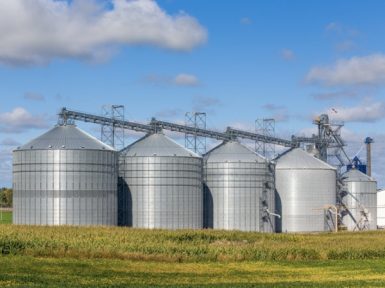
A Flat Bottom Silo is the most widely used commercial grain storage silo for large-capacity storage. As the name suggests, the silo rests on a reinforced concrete foundation with a flat floor.
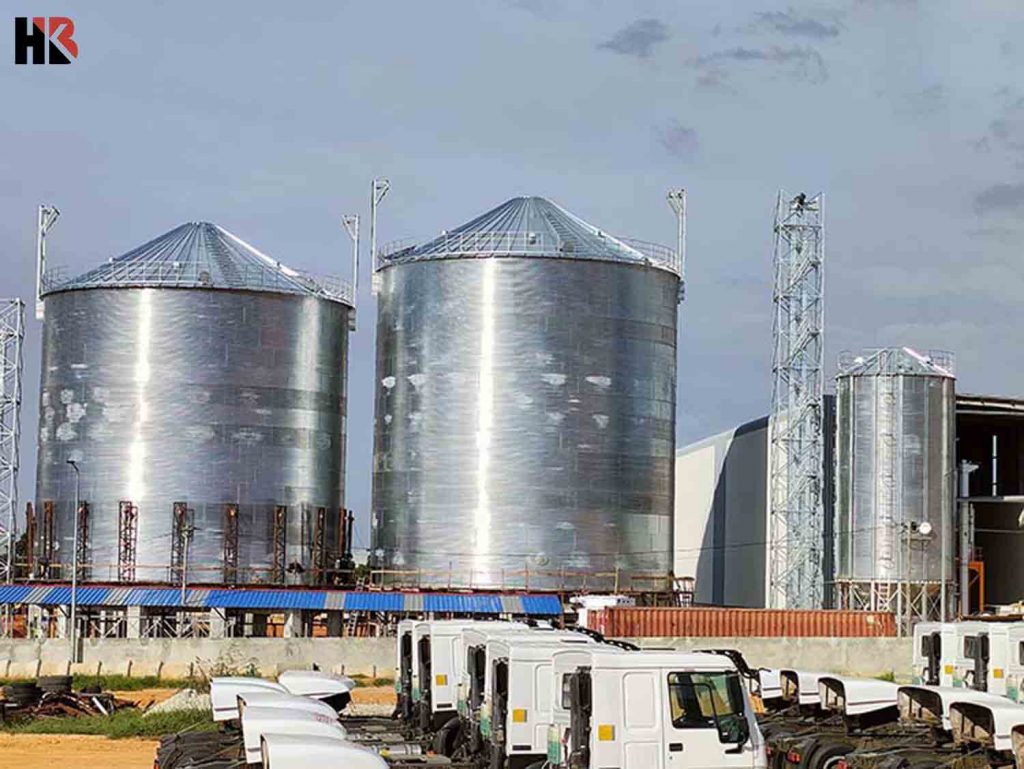
It is designed primarily for long-term grain preservation and is widely used by:
Because the floor is flat, grain is discharged through a combination of a center discharge opening and a sweep auger that removes the remaining grain after gravity unloading.
✓ Lowest storage cost per ton
✓ Extremely large storage capacity
✓ Excellent structural stability
✓ Easy to expand into multi-silo projects
✓ Suitable for automated grain handling systems
✓ Compatible with grain dryers and conveying equipment
✓ Long service life
Modern flat bottom silos also support advanced monitoring systems, allowing operators to monitor grain conditions in real time and reduce spoilage risks.
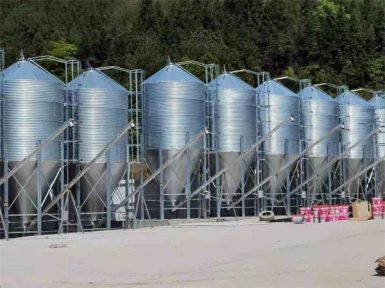
Unlike flat bottom silos, a Hopper Bottom Silo features a conical steel base that allows grain to discharge completely through gravity.
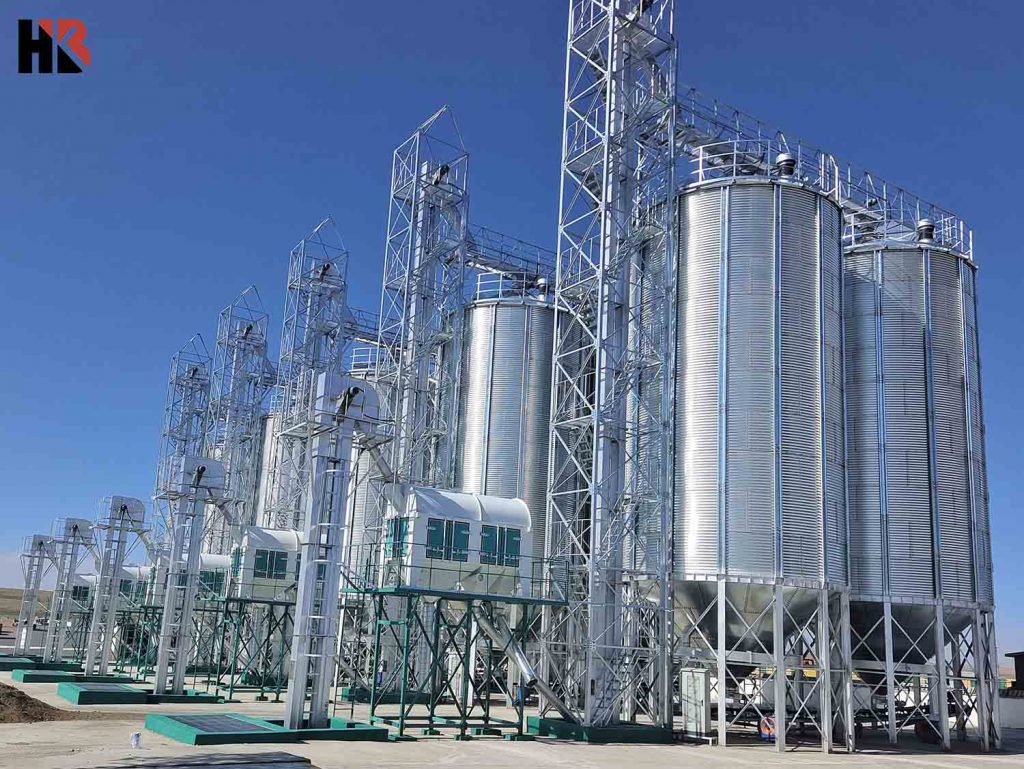
This design eliminates the need for a sweep auger and makes unloading faster and more efficient.
✓ 100% gravity discharge
✓ Faster unloading
✓ Lower labor requirements
✓ Better for frequent loading and unloading
✓ Minimal grain residue
✓ Reduced cleaning time
✓ Lower contamination risk between grain batches
| Feature | Flat Bottom | Hopper Bottom |
| Capacity | 500–10,000+ Tons | 5–2,000 Tons |
| Best For | Long-term Storage | Frequent Loading & Unloading |
| Discharge | Sweep Auger | Gravity |
| Investment | Lower per Ton | Higher per Ton |
| Maintenance | Low | Low |
| Typical Users | Grain Terminals | Farms & Feed Mills |
In most commercial grain storage projects, flat bottom silos provide the lowest storage cost per ton, while hopper bottom silos offer greater operational flexibility.
Feed silos are specially designed for storing processed animal feed rather than raw grain.
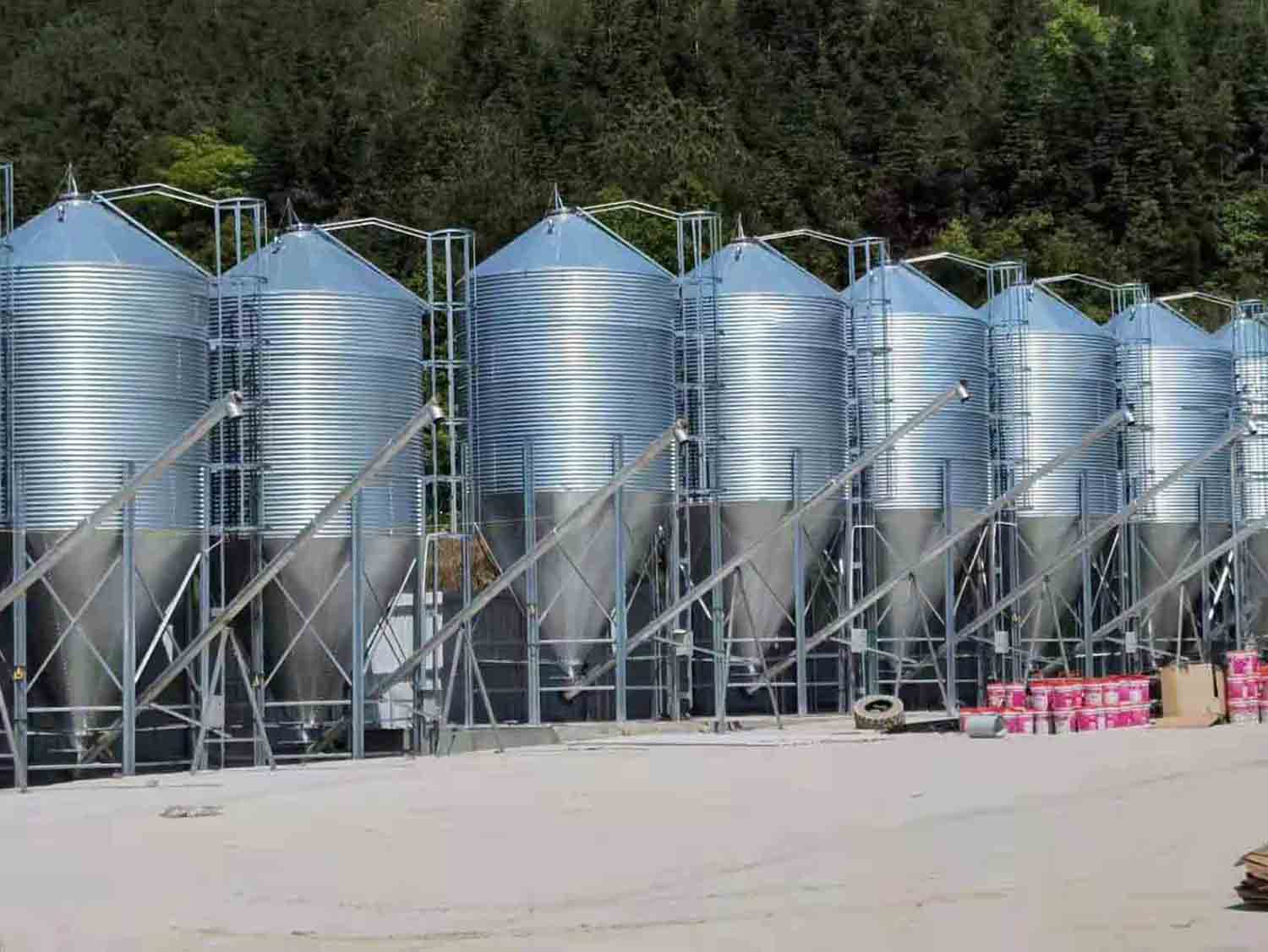
These silos typically feature:
Selecting the right agricultural silo depends on more than storage capacity. To ensure long-term grain quality and operational efficiency, consider the following factors before starting your project.
Different crops require different storage conditions and handling systems.
| Crop | Recommended Solution |
| Wheat | Flat Bottom Silo |
| Corn (Maize) | Flat Bottom Silo + Grain Dryer |
| Rice (Paddy) | Flat Bottom Silo |
| Soybeans | Flat Bottom Silo |
| Coffee Beans | Coffee Bean or Hopper Bottom Silo |
| Seeds | Seed or Hopper Bottom Silo |
| Animal Feed | Feed Silo |
Choose a storage capacity based not only on current production but also future expansion plans. Modular silo systems allow additional capacity to be added as your business grows.
Climate directly affects silo design and grain preservation. When planning your project, evaluate:
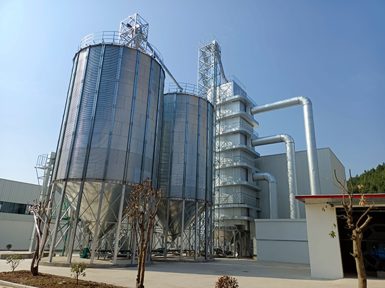
A modern grain storage facility is an integrated system rather than a single storage structure. For better efficiency, many commercial projects combine silos with:
Before requesting a quotation, prepare the following information to help engineers recommend the most suitable solution.
Providing these details helps shorten the design process and ensures a more accurate quotation.
Avoiding the following mistakes can significantly improve storage performance and reduce long-term operating costs.
Plan for future expansion instead of today's harvest volume.
Grain should be dried to a safe moisture level before long-term storage to prevent mold and spoilage.
Flat bottom silos are ideal for long-term, high-capacity storage, while hopper bottom silos are better suited for frequent loading and unloading.
Buying silos, dryers, conveyors, and automation systems from different suppliers can create compatibility and maintenance challenges. Choosing a supplier capable of delivering a complete grain storage solution simplifies installation, commissioning, and long-term technical support.
Many buyers purchase silos, conveyors, grain dryers, and automation from different suppliers. While this may reduce initial equipment costs, it often creates compatibility issues during installation and commissioning.
A complete turnkey grain storage solution offers several advantages:
For medium and large commercial projects, an integrated engineering solution is generally more efficient than sourcing equipment separately.
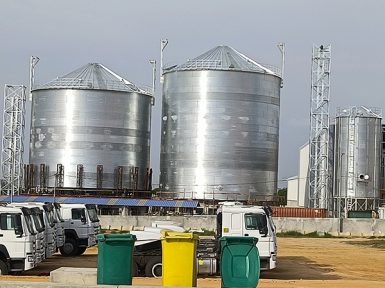
In 2024, HKB supplied a 5,000-ton maize storage system for a commercial grain trader in Uganda. The project included two flat bottom silos, a continuous grain dryer, bucket elevators, chain conveyors, aeration fans, and an automatic temperature monitoring system. After commissioning, the customer reported significantly lower post-harvest losses, improved grain quality, and increased storage efficiency during peak harvest seasons.
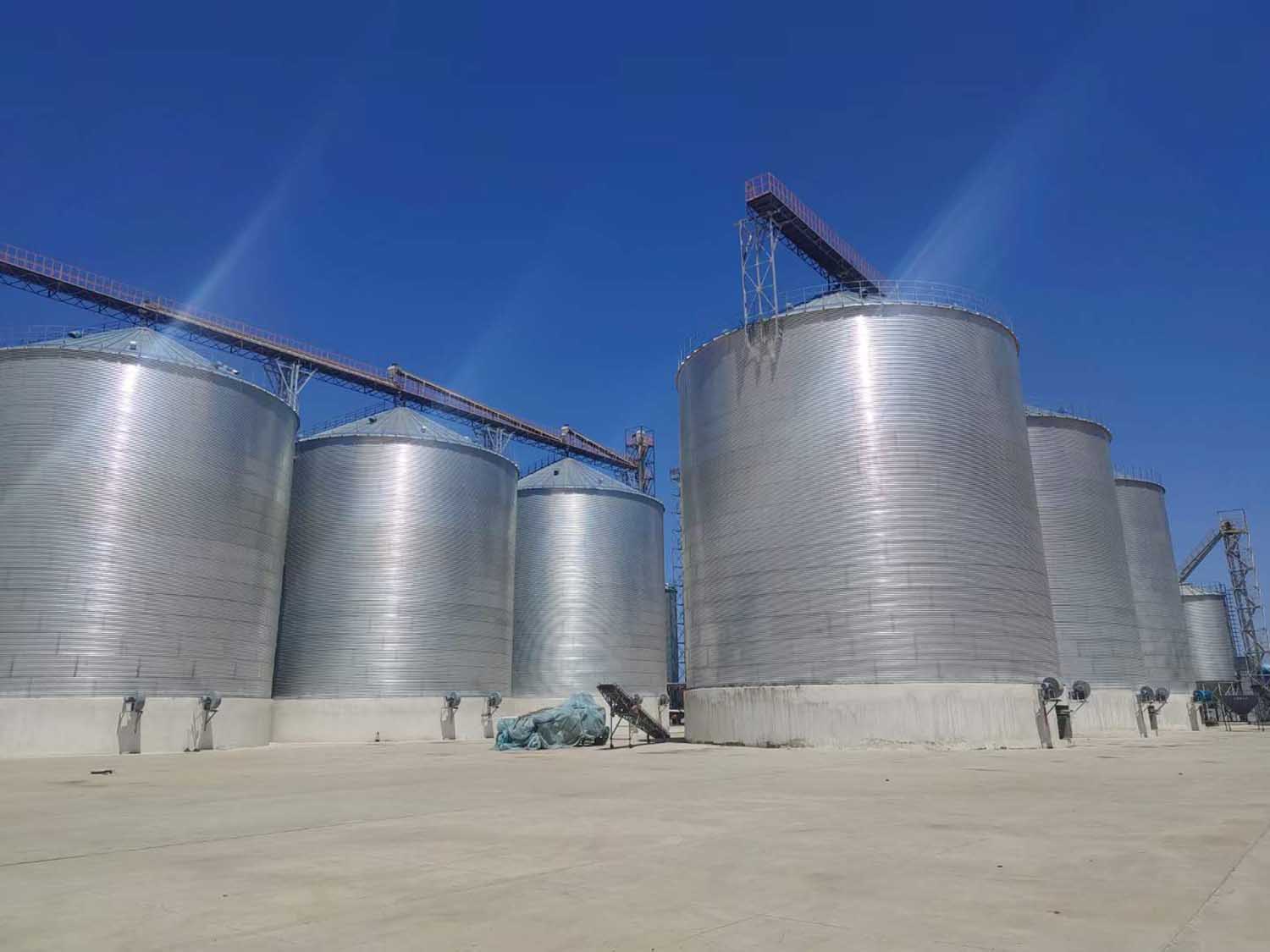
HKB supplied a paddy storage system for a milling plant in Southeast Asia. This project included multiple hopper bottom silos, automatic conveying system, aeration fans, PLC control system, and steel support structures. The integrated system improved production efficiency, stabilized grain quality, and reduced manual handling throughout the milling process.
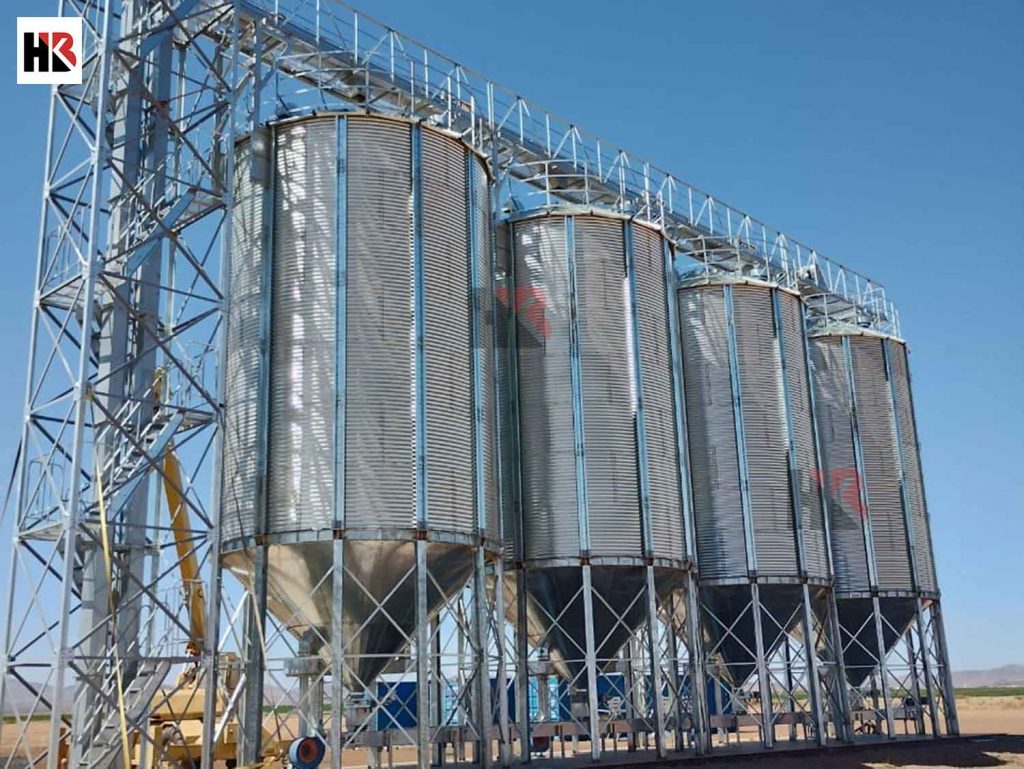
A livestock feed manufacturer required additional raw material storage while maintaining continuous production. HKB designed a system that combines hopper-bottom silos, feed silos, automatic conveyors, and weighing equipment. The modular layout allowed the customer to expand capacity without interrupting daily operations.
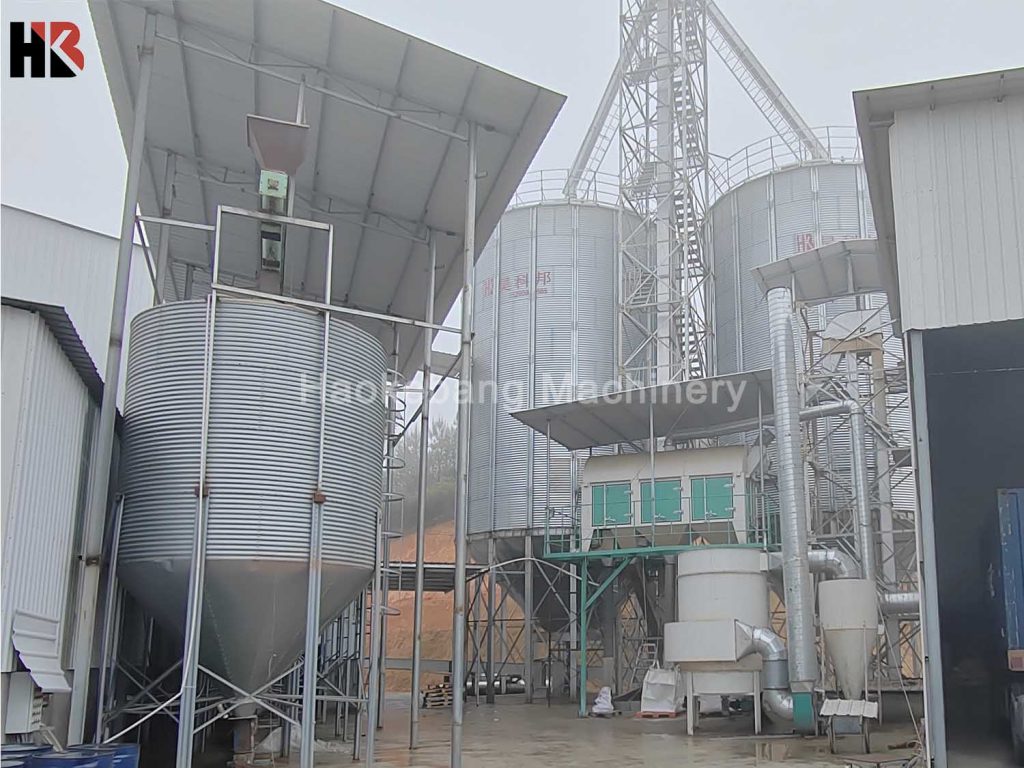
Based on years of international project experience, HKB engineers recommend the following best practices:
By considering the entire grain handling process—not just the silo itself—you can build a storage system that remains efficient, reliable, and scalable for many years.
For commercial maize and paddy storage in tropical regions, we generally recommend installing both aeration fans and temperature monitoring cables. This combination helps minimize moisture migration, reduces the risk of grain spoilage, and improves storage stability throughout the year.
By considering the entire grain handling process—from drying and conveying to storage and monitoring—you can build a grain storage system that remains efficient, reliable, and scalable for many years.
The following questions are based on common inquiries from grain storage investors, feed mill owners, engineering contractors, and agricultural businesses worldwide.
The most common agricultural silos include Flat Bottom Silos, Hopper Bottom Silos, Feed Silos, Seed Silos, and crop-specific silos for rice, wheat, maize, soybeans, coffee beans, and sorghum. The best choice depends on grain type, storage duration, and operational requirements.
Flat Bottom Silos are generally the preferred choice because they offer large storage capacity, lower cost per ton, and excellent compatibility with aeration and temperature monitoring systems.
Hopper Bottom Silos are ideal for operations requiring frequent grain turnover. Their gravity discharge design enables faster unloading with minimal grain residue.
For most commercial grain storage projects, galvanized steel silos provide faster installation, easier expansion, lower maintenance requirements, and better compatibility with automated grain handling systems.
Modern steel silos can safely store wheat, maize, rice, soybeans, sorghum, barley, coffee beans, oilseeds, animal feed, and various seeds when designed for the appropriate storage conditions.
If harvested grain exceeds the recommended moisture level, drying is strongly recommended before long-term storage to reduce the risk of mold, spoilage, and quality loss.
Capacity should be determined by annual production, harvest schedule, storage duration, daily throughput, transportation logistics, and future expansion plans rather than current production alone.
The total investment depends on storage capacity, steel specifications, conveying equipment, aeration systems, automation level, project location, and installation requirements. Customized engineering is usually required for an accurate quotation.
Yes. Properly designed galvanized steel silos can operate reliably in tropical, humid, coastal, and high-temperature environments when equipped with suitable aeration and ventilation systems.
Aeration systems circulate air through stored grain to reduce temperature differences, minimize moisture migration, and maintain grain quality during long-term storage.
Agricultural silos are widely used by grain traders, flour mills, feed mills, rice mills, seed companies, coffee processors, breweries, government grain reserves, and agricultural cooperatives.
Yes. Many commercial projects choose a single supplier to provide silos, grain dryers, conveying equipment, automation, and installation support to improve system compatibility and simplify project management.
Yes, provided the silo is cleaned between batches and configured according to the storage requirements of each crop.
With proper drying, aeration, and temperature monitoring, many grains can be safely stored for several months to more than one year, depending on the crop and local conditions.
Yes. HKB provides customized engineering design, installation drawings, remote technical guidance, engineer supervision, and on-site installation support for grain storage projects worldwide.
Simply provide your grain type, required storage capacity, project location, and production goals. HKB's engineering team will recommend a customized grain storage solution, prepare layout drawings, and provide a detailed quotation.
Building a successful grain storage facility requires more than purchasing steel silos. Long-term performance depends on professional engineering, compatible equipment, proper installation, and reliable technical support throughout the project lifecycle.
With grain storage projects delivered in more than 40 countries, HKB has accumulated practical experience across a wide range of crops, climates, and operating conditions. From commercial grain terminals and feed mills to agricultural cooperatives and government reserve facilities, every solution is designed to match the customer's production requirements and future expansion plans.
Rather than supplying individual pieces of equipment, HKB delivers complete grain storage engineering solutions designed to improve project efficiency, simplify installation, and reduce long-term operating costs.
Whether you are planning a 100-ton farm storage silo, a 1,000-ton commercial grain storage facility, or a large turnkey grain storage project, our engineering team can help evaluate your requirements and recommend a solution based on your crops, production capacity, local climate, and future expansion plans.
Contact HKB to discuss your project and receive a customized grain storage solution designed for reliable, long-term performance.
An agricultural silo is a specialized grain storage structure used…


 WeChat:+8613598071775